Vintage Haunted House Backgrounds for Spooky Design Projects
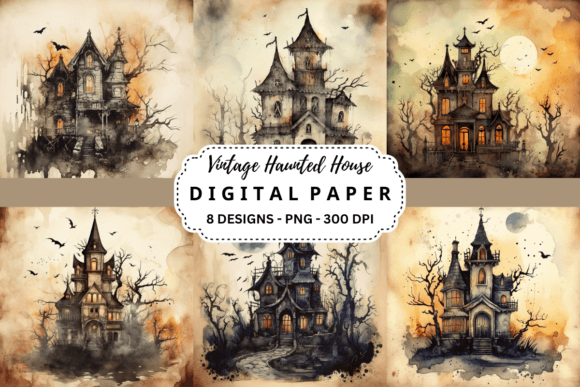
There's a particular mood that only a well-crafted haunted house aesthetic can create—a blend of nostalgic eeriness and artistic charm that modern, glossy designs often miss. If you've been searching for that perfect atmospheric foundation for your creative work, the Vintage Haunted House Backgrounds collection offers exactly what many designers and creators need: eight high-quality, ready-to-use digital assets that capture the spirit of classic Halloween and gothic design.
What Makes These Backgrounds Stand Out
Each of the eight PNG files delivers 300 DPI resolution at 3600 x 3600 pixels, which means you're working with genuinely print-ready assets. Whether you're designing a social media post template, creating a banner for an October campaign, or putting together invitation cards for a themed event, the file quality ensures your final output looks crisp and professional. The vintage styling gives these backgrounds a character that's hard to replicate with stock photography or generic textures—they carry that handcrafted, slightly weathered personality that appeals to audiences who appreciate authenticity in design.
The visual language here draws from classic haunted imagery: think Victorian-era architecture silhouettes, atmospheric fog textures, aged paper tones, and subtle grunge elements that add depth without overwhelming your foreground content. These aren't cluttered or chaotic backgrounds. They're designed to support your typography, photography, and graphic elements while establishing a strong thematic foundation. That balance between visual interest and functional restraint is what separates useful design assets from decorative noise.
Practical Applications Across Creative Projects
The versatility of the Vintage Haunted House Backgrounds collection is worth highlighting. For social media managers and content creators, these work exceptionally well as base layers for Instagram stories, Facebook cover images, Pinterest pins, and seasonal campaign graphics. Drop in your text, add a few complementary design elements, and you have a cohesive post that feels intentional rather than thrown together.
For entrepreneurs running print-on-demand businesses, these backgrounds open up real product possibilities. Think wrapping paper for boutique gift shops during the Halloween season, printable labels for artisan food products, poster designs for local haunted attractions, or scrapbooking elements that crafters will genuinely want to use. The 300 DPI specification matters here—retail printing demands resolution that holds up under close inspection, and these files deliver on that requirement.
Graphic designers working on brand identity projects for seasonal businesses, haunted houses, escape rooms, or gothic-themed venues will find these backgrounds particularly useful during the concept development phase. They can serve as mood-setting elements in presentations or as actual production assets for marketing collateral. The consistent vintage aesthetic across all eight files also helps maintain visual cohesion when you're building out a multi-piece campaign—your banner design, invitation cards, and social media graphics will naturally feel like they belong together.
Design Considerations and Pairing Strategies
When incorporating Vintage Haunted House Backgrounds into your work, think carefully about your foreground typography choices. Because these backgrounds carry strong visual personality, your text needs sufficient contrast and clarity to remain readable. A clean sans serif font often works well for headlines against these textured backgrounds, while a classic serif font can complement the vintage aesthetic for longer body copy. If you're going for a more theatrical or whimsical tone, a carefully chosen script font or handwritten font can work beautifully—just make sure the letterforms don't compete with the background texture for attention.
Color palette decisions matter too. Muted tones—deep burgundies, weathered golds, dusty oranges, and charcoal grays—tend to harmonize naturally with vintage haunted house imagery. If you're designing for a brand that uses brighter, more saturated colors, consider using the background at reduced opacity or selecting a version from the collection with more neutral undertones. This approach lets you maintain your established brand identity while still benefiting from the atmospheric depth these backgrounds provide.
For web design applications, keep file optimization in mind. While the original 3600 x 3600 pixel files are perfect for print projects, you'll want to create appropriately sized versions for digital use to maintain fast page load times. Most design software makes this straightforward, and the high source resolution means your downsized versions will look sharp on screens.
Evaluating Fit for Your Specific Project
Before committing these backgrounds to a client project or your own brand materials, test them in context. Place your actual text, logos, and design elements over the backgrounds at the size they'll appear in final use. Check readability across different devices if you're designing for digital platforms. Print a physical proof if your project involves printed materials—what looks great on a calibrated monitor sometimes needs adjustment when ink hits paper.
Consider your audience's expectations as well. Vintage haunted house imagery resonates strongly with adults who grew up with classic Halloween aesthetics, horror film enthusiasts, fans of gothic literature, and anyone drawn to the intersection of nostalgia and the macabre. If your target audience skews toward these interests, these backgrounds will feel like a natural fit. For projects targeting a broader or different demographic, you might use the backgrounds more subtly—as texture overlays at low opacity or as accent elements rather than dominant design features.
The commercial licensing of quality design assets like these Vintage Haunted House Backgrounds gives you the flexibility to use them across both personal and professional projects. Whether you're a hobbyist creating party invitations for friends or a small business owner developing product packaging, having reliable, high-resolution assets in your toolkit saves time and elevates your output. Investing in well-made design assets rather than settling for low-quality alternatives pays dividends in the finished product's professionalism and audience reception.